
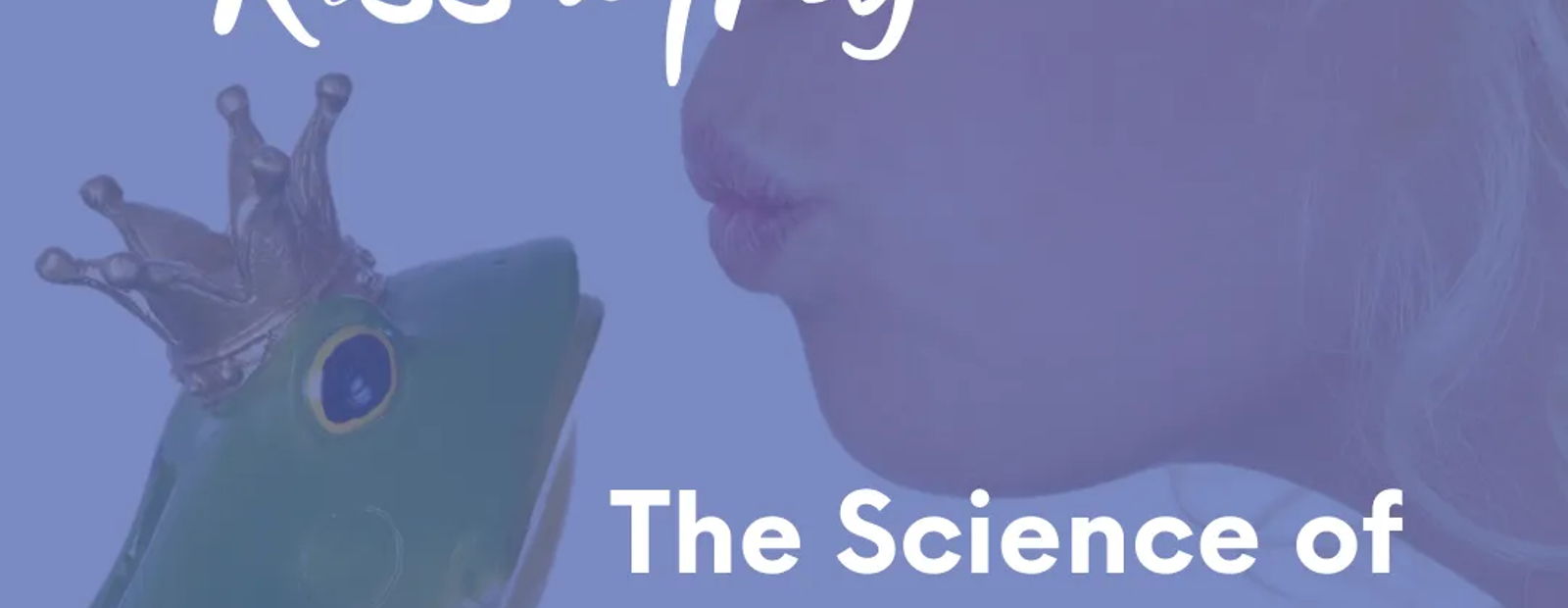
A business coach once said to me: start your day by kissing a frog. Her logic? After the frog, any other task that day will feel like princes and princesses. (No offense to actual frogs, of course.🐸)
The “frog” is the hard thing—the task you know will stretch you, challenge you, or make you uncomfortable. For athletes, it doesn’t have to be a metaphorical meeting with a slimy amphibian. It can be very real, very tangible, and very sweaty.
The hard thing could be:
- Adding an extra set when your muscles are whispering “enough.”
- Pushing 5% faster on that interval, even when your legs threaten mutiny.
- Finishing strong at the top of the hill when every fiber wants to quit.
- Saying no to a food you know irritates your gut, even if it’s delicious.
- Saying yes to the food that fuels your workouts and powers your brain.
- Speaking up for yourself, setting boundaries, and making space for what you need.
- Listening to your inner intuition, even when it whispers things you’d rather ignore.
But here’s the kicker: the hard thing isn’t always about pushing harder. Sometimes, the bravest, hardest act is to pause. To recover. To honor fatigue. To focus on rehab or rest when your body is asking for it. Because true performance—physical, mental, emotional—doesn’t come from endless push. It comes from knowing when to push and when to pause.
For women juggling intense training, demanding careers, and overflowing calendars, the “frog” could look different every day. Some days it’s lifting heavier. Some days it’s clearing your schedule. Some days it’s asking for help instead of doing it all yourself.
The Science of Pushing Slightly Beyond Your Perceived Effort
When you exercise, your muscles and nervous system work together to produce movement. Perceived effort is how hard a task feels to you—it’s your internal sense of strain, fatigue, or challenge.
Slightly beyond perceived effort → going just a bit harder than what feels “comfortable” or “safe.” Not total exhaustion, but enough to challenge your body.
Neuromuscular adaptations → changes in how your muscles and nervous system communicate. This includes:
• Recruiting more motor units (more muscle fibers activated)
• Increasing firing rates of nerves to muscles
• Improving coordination between muscles
• Enhancing force production and power
In practice:
• Doing an extra rep after your muscles feel “done”
• Adding a bit more speed or load than usual
• Holding a position slightly longer or performing a small, controlled “overload”
Why it matters:
• Your nervous system learns to activate more muscle fibers efficiently.
• Your muscles get stronger, more coordinated, and more explosive.
• You build physical resilience without necessarily needing huge increases in volume.
Small, deliberate increases in effort stimulate both neural adaptations (first) and muscle hypertrophy (later).
It’s not about pushing to total failure every session; that risks injury and overtraining. It’s about controlled challenge that nudges your body to adapt.
🐸The beauty of kissing a frog?
Every time you tackle that hard thing, you’re building resilience, confidence, and clarity. You’re proving to yourself that discomfort is temporary—but growth is permanent. And with each conquered “frog,” the next task, challenge, or hill becomes a little easier to face.
So today, find your frog. Kiss it. Conquer it. And watch how the rest of your day—your week, your training, your energy—feels like princes and princesses.
References
- Progression Models in Resistance Training for Healthy Adults. Medicine & Science in Sports & Exercise 41(3):p 687-708, March 2009. https://journals.lww.com/acsm-msse/fulltext/2009/03000/progression_models_in_resistance_training_for.26.aspx
- Morphological and Neurological Contributions to Increased Strength. The Adaptations to Strength Training. January 2013, Volume 37, pages 145–168, (2007). https://link.springer.com/article/10.2165/00007256-200737020-00004
Dr. Andrea Proulx, ND — helping female athletes crush fatigue, fix their hormones, and finally perform like the athlete they know they are. Read full bio