

Vision, Reality, and the Body You’re In:
How to Hold Your Future Self Without Fighting Your Physiology
Most high-achieving, active women are very good at vision (at least in 1 department of their lives).
You can clearly picture the future version of yourself: strong, resilient, energized, mentally sharp, financially abundant, living a big, full life well into your later decades.
And then there’s today.
😬Today might look like low iron.
😬Or hormone dysregulation.
😬Or fatigue that ranges from low exercise motivation and poor performance or straight-up pure exhaustion.
😬Or an autoimmune flare, anxiety, low mood, or brain fog that feels wildly incompatible with the woman you 😬know you’re capable of becoming.
So the tension arises:
How do you stay motivated by your future self without being in complete denial of your current body and situation?
This is not a mindset problem.
It’s an identity integration problem.
The False Binary: Push Forward or Pause Your Dreams
Most women fall into one of two camps:
1. Vision without compassion
“I know who I want to be, so why can’t my body keep up?”
→ leads to overtraining, self-criticism, nervous system overload, and physiological debt.
2. Compassion without vision
“My body isn’t well right now, so I’ll revisit my dreams later.”
→ leads to loss of momentum, shrinking identity, and stagnation.
Neither creates long-term health or performance.
The answer isn’t choosing one. These aspects of ourselves are not mutually exclusive.
The answer is learning how to hold both—strategically.
What the “Future Self” Narrative Often Gets Wrong
The wellness and personal-development space loves the idea of visualizing your future self. Don’t get me wrong, I also make patients take the time to do this visualization. The “big picture vision” is important as an anchor (the kind that keeps you on course, not the kind that sinks you).
But what often gets skipped is biology.
👉A ferritin of 18 is not a mindset issue.
👉Nervous system and hormone dysregulation are not a motivation issue.
👉Autoimmune activity is not a discipline issue.
👉Insomnia, brain fog, lack of focus are not fake-news.
Your nervous system, hormone system, immune system, and mitochondria determine what you can physically embody today.
When vision ignores physiology, the result isn’t manifestation—it’s misalignment.
And misalignment shows up as:
• burnout
• recurring injuries
• stalled progress
• emotional frustration with a body that feels “uncooperative”
A Reframe That Changes Everything
Here’s the question that shifts the entire conversation:
If your 60- or 70-year-old self were watching you today, what would she actually ask of you?
Rarely is the answer:
- “Train harder”
- “Do more”
- “Push through”
More often, it’s:
- "Rebuild your iron stores.”
- “Stabilize your hormones and work with them.”
- “Respect your nervous system.”
- “Stop trying to prove yourself and start repairing to show up more powerful in body and mind.”
Your future self is not disappointed in you for resting.
She is grateful you’re building capacity instead of borrowing from it.
The Missing Piece: The Evolution Phase
You are not:
• the version of you defined by illness or fatigue
• nor yet the fully expressed future version you envision
You are the regulated, rebuilding version in between.
This Evolutionary Self is:
- recovery-oriented, not lazy
- strategic, not passive
- patient, but intentional
This is the phase where foundations are built:
- metabolic resilience
- hormonal adaptability
- nervous system capacity
- long-term training tolerance
Skipping this phase is how people look “healthy” (ie social media’s idea of skinny and beautiful) in their 20s and 30s—yet fragile in their 40s and beyond.
Neurophysiology: Why Your Body Needs Alignment, Not Pressure
From a neurophysiology standpoint, chronic misalignment between vision and capacity keeps the body in a stress loop. And that’s killer – for your heart and your waistline!
Here’s what happens when you push a body that’s under-resourced:
- The hypothalamus prioritizes survival over optimization
- Cortisol stays elevated to compensate for low energy availability
- Thyroid conversion slows – hello hypothyroidism
- Sex hormone signaling becomes less efficient
- Recovery capacity drops, even if training volume stays the same – nagging injuries, 🤮
Your brain isn’t blocking your progress—it’s protecting you.
The fastest way forward is not more force.
It’s restoring safety and resources so the nervous system allows adaptation again.
What This Looks Like in Real Life
Balancing today with your future self often means:
• Training to support hormones, not challenge them
• Choosing consistency over intensity
• Measuring progress by:
- energy stability
- recovery speed
- emotional regulation
- training tolerance
Today, you might not be building peak performance.
You might be building the infrastructure that makes peak performance possible for decades.
That is not a step backward.
That is long-game intelligence.
The Bottom Line
You don’t need to choose between honoring your current body and dreaming big.
The most epic version of you is built by the woman who knows when to push—and when to repair.
Your future self isn’t asking you to override your biology.
She’s asking you to work with it.
Your move:
Ask yourself: Who am I becoming—and what does she need right now?
- Now, close your eyes.
- Take 10 deep breaths.
- Picture yourself at 60: moving easily, sharp, confident, laughing after a workout.
- Now ask: “What did I do in my 30s and 40s that made this possible?”
- Write the first 3 words that come up.
No judgement, just quick intuition-driven responses.
Seeing your Future Self isn't "woo-woo" or some hippy idea - it's the foundation to be able to live big dreams and not burnout.
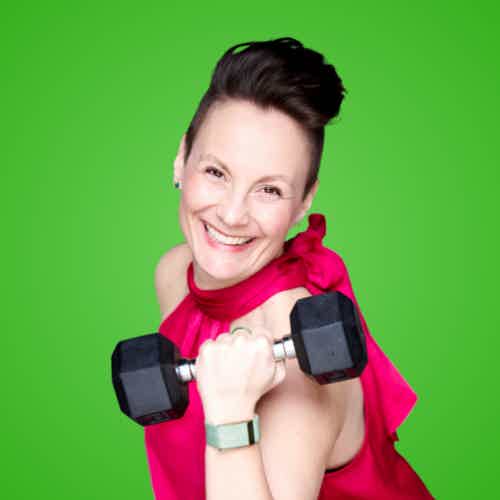
Dr. Andrea Proulx, ND — helping female athletes crush fatigue, fix their hormones, and finally perform like the athlete they know they are. Read full bio